
Published August 6, 2026
Short answer: if your property has a cesspool, the law applies to it. All of them. Not just the ones near the ocean, not just the ones near a stream.
We are writing this because the opposite is circulating, including on other Oʻahu contractors’ websites, and it leads homeowners to conclude they are exempt when they are not.
What Act 125 actually says
In 2017 Hawaiʻi passed Act 125, requiring every cesspool in the state to be upgraded, converted to a septic system, or connected to a sewer by January 1, 2050. Hawaiʻi had already become the first state to ban new cesspools, in 2016.
There is no distance test in the deadline. There is no exemption for inland properties. Roughly 88,000 cesspools statewide are covered, more than 11,000 of them on Oʻahu, per the Hawaiʻi Department of Health.
Both of those are Department of Health estimates, drawn from its 2017 assessment. We have since built parcel-level data for Oʻahu from the same prioritization tool, matched against county owner records — it maps 7,106 cesspool parcels, and explains why a parcel count lands below a cesspool count.
Where the “500 feet” idea comes from
You may have read that the mandate applies only to properties within 500 feet of state waters. That is not what the statute requires.
What is true is that the Department of Health has prioritized cesspools into tiers, and proximity to water is one factor in that prioritization. Priority affects when the pressure arrives and which areas may face earlier deadlines — it does not decide whether the 2050 requirement applies. Every cesspool has to go.
If you are outside 500 feet of state waters and concluded you were exempt, you are not. You may simply be lower priority.
Why the state is doing this
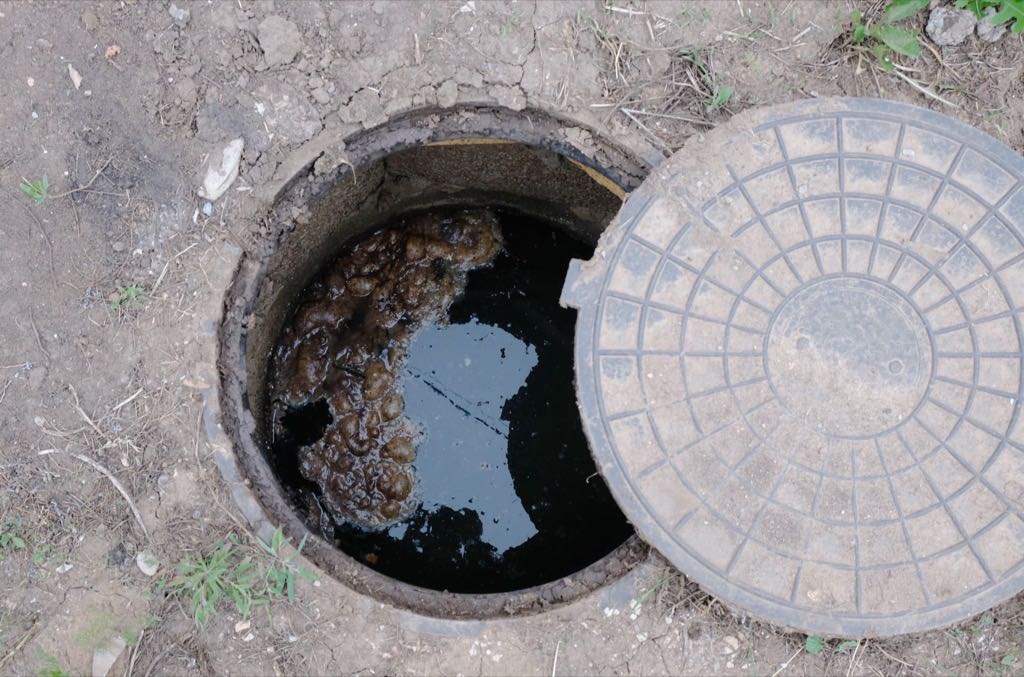
A cesspool is a pit. There is no treatment stage and no outlet — waste sits in the ground and seeps out.
On Oʻahu alone, about 7.5 million gallons of untreated wastewater enters the ground every day this way. It moves into groundwater, which is where much of our drinking water comes from, and out to the reefs and beaches.
How to find out what you have
Plenty of Oʻahu homeowners genuinely do not know what is under the yard. Four ways to find out:
- Your property documents. Closing paperwork or a past inspection usually names the system.
- State records. The Department of Health keeps records of registered cesspools.
- The University of Hawaiʻi Sea Grant cesspool map, which shows locations and priority levels. Our Oʻahu cesspool ownership data is built from the same source.
- Ask us. If we pump your system we can tell you exactly what you have, at no charge.
Do you have to convert right now?
No. As of mid-2026 the only deadline in law is 2050, and there is no requirement to convert when you sell — though sellers must disclose a cesspool, and buyers increasingly negotiate the conversion cost into the price. Bills requiring conversion at point of sale have been proposed, so that could change.
What we would not do is treat 2050 as far away. Hawaiʻi converts about 400 cesspools a year against a backlog of 88,000, and as the deadline approaches, tens of thousands of owners will be competing for the same contractors, engineers and permits.
Next steps
If you want to know where you stand, the Hawaiʻi cesspool conversion guide covers the options, the real costs and the permit process. The funding picture changed this year and is worth reading alongside it.
And if you want someone to look at your actual system, call (808) 630-9966. The inspection is free, and we will tell you what your property can support before you spend anything on engineering. When you are ready, we handle cesspool conversion across Oʻahu.